When I first wondered “Who Were The First Inhabitants Of The Blue Mountains?”, I didn’t expect that asking the question would lead me down a road that would take me back more than 22,000 years – that’s before the last Ice Age even – long before explorers like Gregory Blaxland, William Charles Wentworth, and Lieutenant Lawson who actually made it over the mountains in 1813.
Before the three of them stood looking out at Mount York and gazing out towards Bathurst, this place already had a deep history – it wasn’t some “impassable barrier” as the first settlers thought – but rather a pretty well-travelled network of paths that had been used by the folks who called this place home for thousands and thousands of years. Every hill, every creek, and every valley here has a story behind it – and these stories continue to shape the Blue Mountains even to this day.
The Dharug, Gundungurra & Wiradjuri Peoples
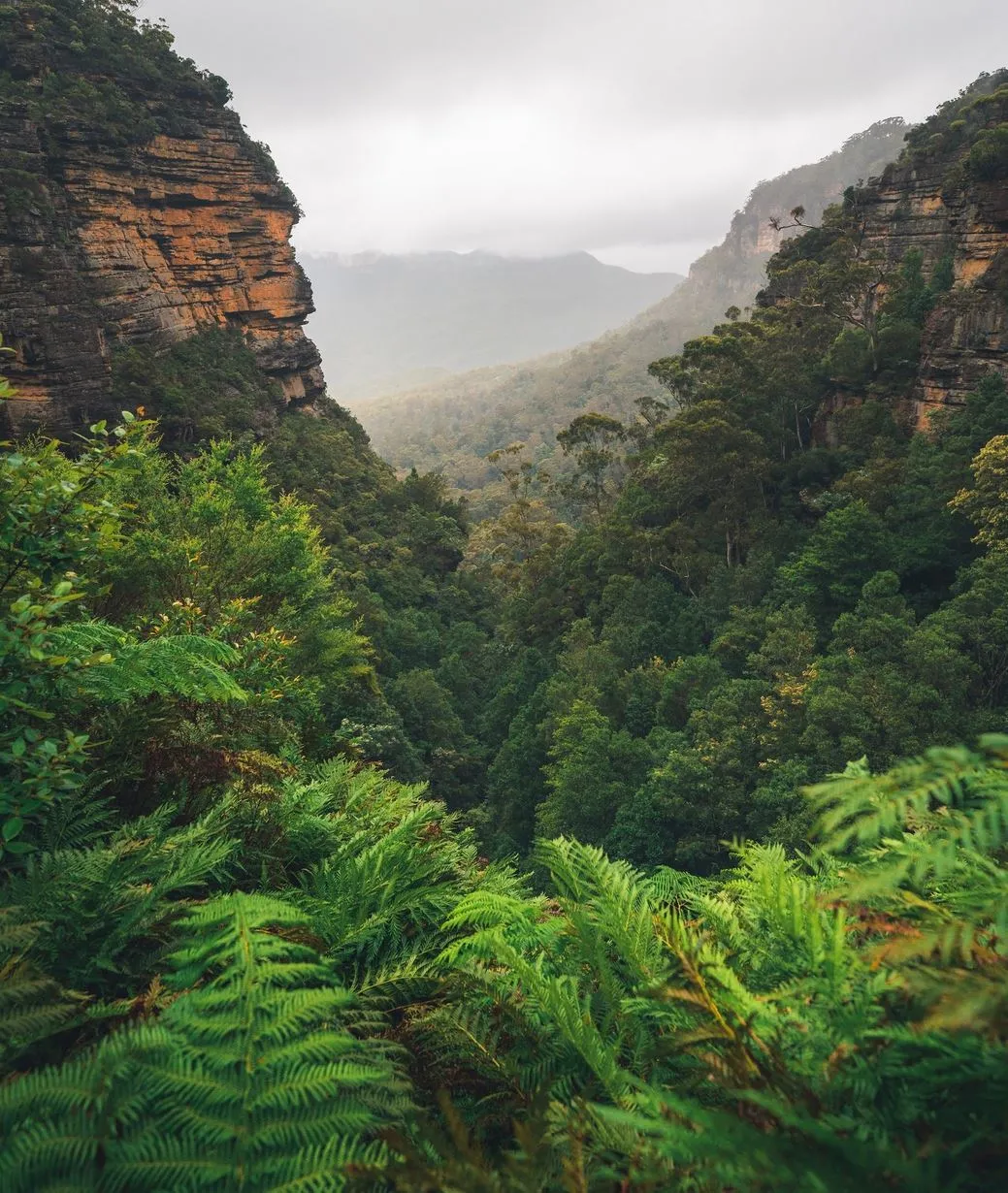
The Dharug, Gundungurra, and Wiradjuri peoples are the Traditional Custodians of the Blue Mountains and the surrounding valleys—people who have looked after this land for thousands of years, long before any settlers arrived. Each of the groups still has its own unique lore, language and connection to the land, and all of these things are still pretty important today.
The Dharug People were based down near the eastern foothills, around Emu Plains and the Hawkesbury River and would head out to places like Hawkesbury Lookout and Hawkesbury Heights on trading missions.
The Gundungurra People, on the other hand, were based in the southern valleys and ridges – that’s the Jamison, Kedumba, and Burragorang valleys – but would regularly move on up to places we now know as Wentworth Falls and Leura.
The Wiradjuri People lived way out west, across the high plains towards Mount Victoria and Bathurst, and were connected by these mystical “songlines” that crisscross the ground where we now know as Victoria Pass.
Each of the groups had its own clearly defined boundaries – usually marked by natural landmarks like rivers, ridges and valleys – so they could live in harmony with the land and their neighbours.
| Nation | Primary Region | Language Group | Cultural Highlights |
|---|---|---|---|
| Dharug | Eastern Foothills & Hawkesbury Valleys | Dharug | Rock Engravings, Trade Networks, Fishing Practices |
| Gundungurra | Southern Valleys (Jamison, Burragorang) | Gundungurra | Dreaming Stories, Stone Tool Sites, Ochre Use |
| Wiradjuri | Western Plains & Upper Catchments | Wiradjuri | Oral Histories, Riverine Life, Ceremonial Sites |
Even as Blaxland and Wentworth were trekking through what they called “unexplored” country, they were following in the footsteps of the oldest living culture on earth.
Archaeological Evidence: Bones, Fire, And Stone
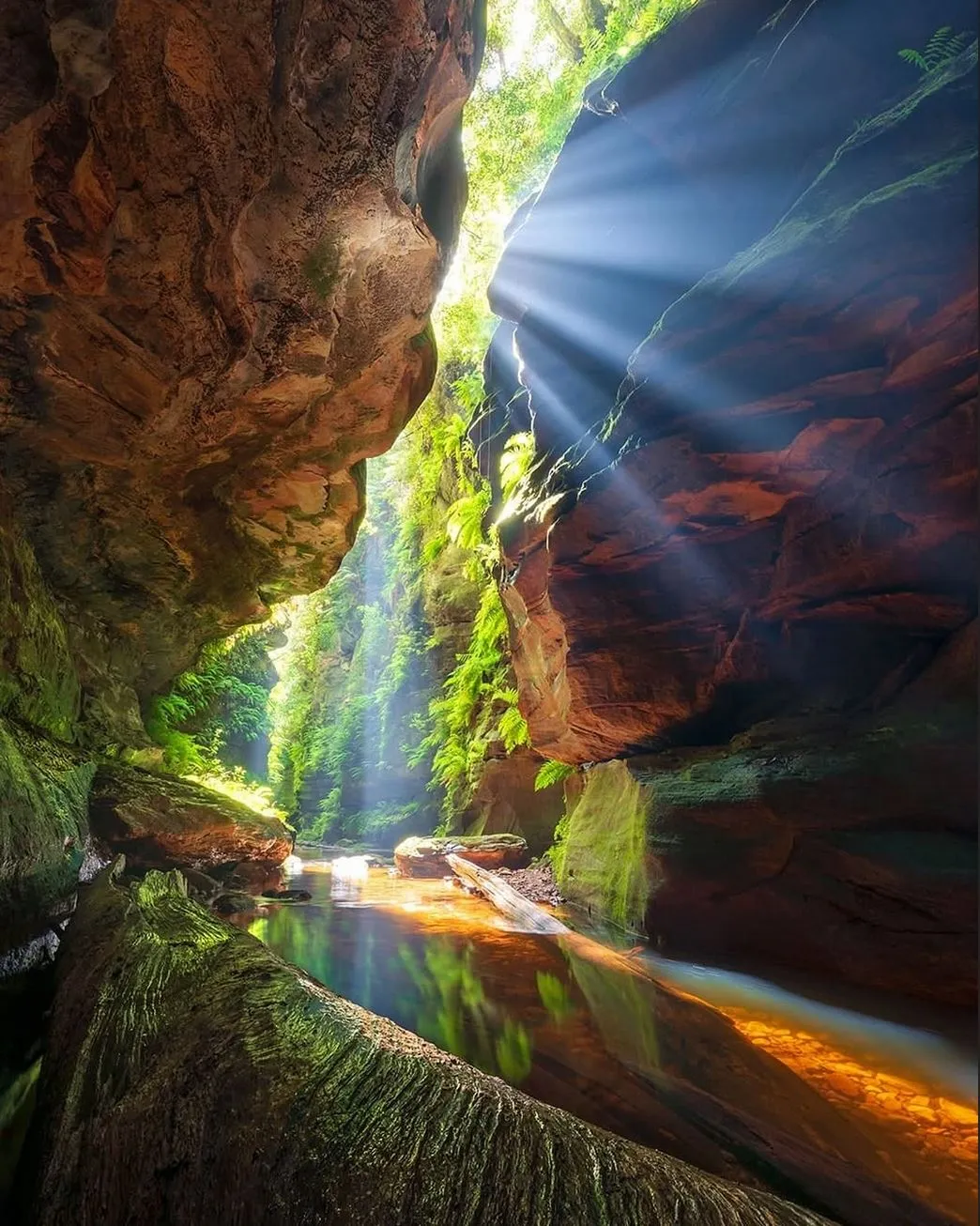
The Blue Mountains’ sandstone country keeps secrets well. Archaeological digs — from Kings Tableland near Wentworth Falls to shelters around Mount Victoria — have uncovered stone flakes, charcoal hearths and ochre art, proving human presence here for more than 22,000 years.
At Red Hands Cave in Glenbrook, hundreds of ochre stencils line the rock walls — hands of ancestors reaching across time. Further west, near Mount York, artefacts show trade and tool-making activity over generations.
Archaeologists working with Traditional Owners use radiocarbon dating and microscopic residue analysis to verify these findings, and they match the stories shared orally for thousands of years. The Blue Mountains Railway and early roads like Bathurst Road later cut through these cultural landscapes — but beneath the modern infrastructure, the old tracks remain.
Life In The Blue Mountains Before Colonisation
Before colonisation, the Blue Mountains were home to thriving communities that lived in accordance with the seasons and the land. Family groups moved between the high ridges in summer and the sheltered valleys in winter, following animal tracks, plant cycles and water sources.
Daily life was guided by observation and respect:
- Camps were set up around Carmarthen Hills, Orphan Rock and the upper Jamison Valley.
- Stone tools were made near outcrops now buried beneath Macquarie Road and Bull’s Camp.
- Fire was used to maintain open bushland and encourage food growth.
- Far from isolated, these communities traded with coastal people — stone, ochre, and shell ornaments exchanged long before William Cox built the first road over the mountains in 1814.
The explorers’ journals say it was a “harsh wilderness”. But the truth is, the land was never empty — it was alive, managed with precision and care by those who knew it best.
Dreaming Stories And Spiritual Landscapes
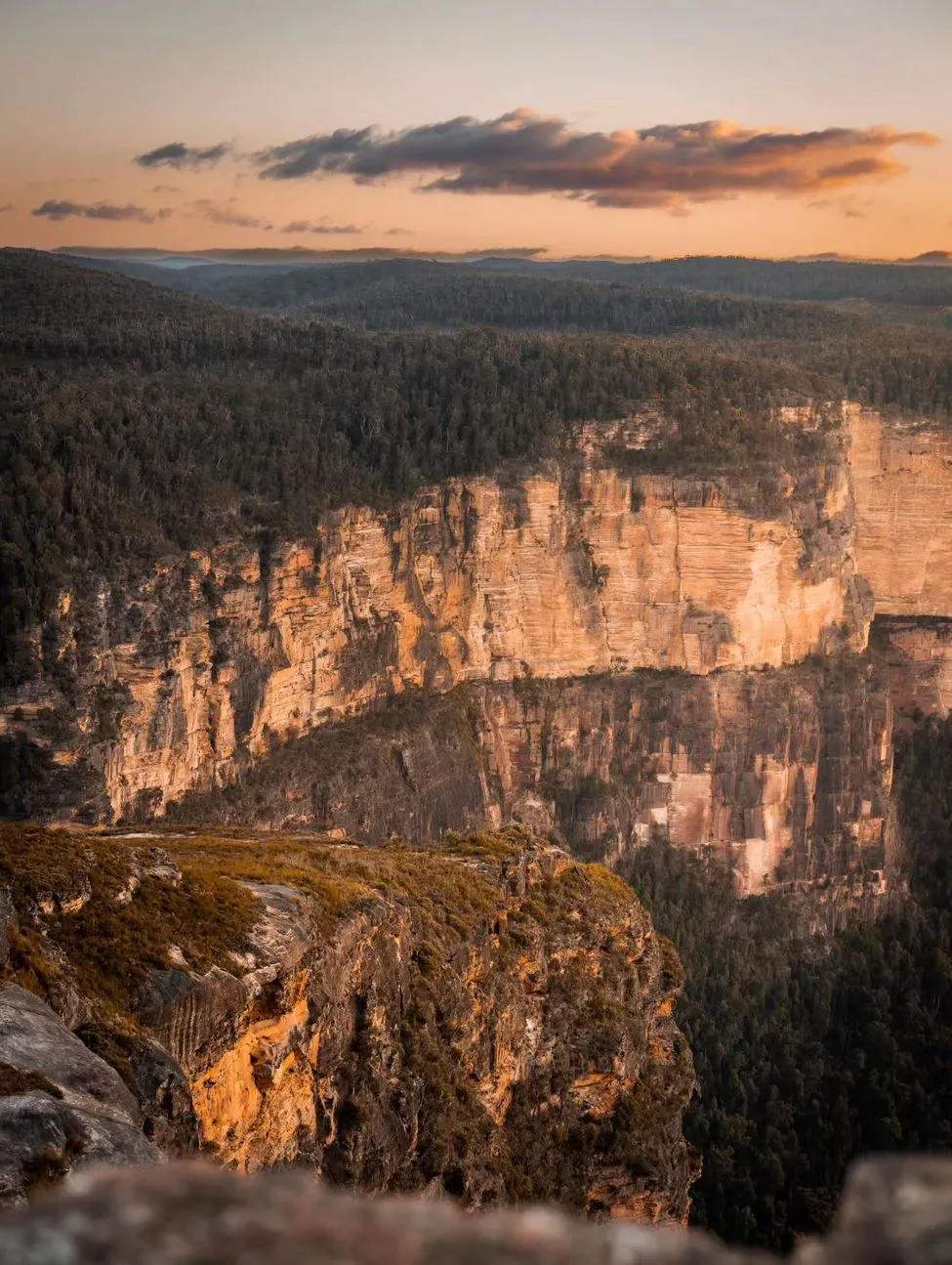
If you’ve stood at Echo Point and looked out over the Jamison Valley, you’ve seen more than just the Three Sisters — you’ve seen a living story. The Gundungurra tell how Meehni, Wimlah, and Gunnedoo were turned to stone to protect them from harm, their spirits still watching over the valley below Wentworth Falls.
Across the range, sacred stories link the peaks of Mount York and Mount Victoria to creation beings who made the rivers and ridgelines. Caves like Red Hands Cave and shelters along the Cox’s River aren’t relics — they’re the archives of Dreaming Law, where generations recorded belonging through art and ceremony.
Even visitors like Charles Darwin, who passed through the Blue Mountains in 1836, felt the sense of wonder and scale — though he couldn’t have known the spiritual depth beneath what he saw as “sublime geology”.
Contact And Collapse: 1788–1840
European arrival in 1788 marked the beginning of devastating disruption. Diseases like smallpox reached inland before settlers did, decimating populations. By the time Blaxland, Lawson, and Wentworth “crossed” the mountains in 1813, the region’s Aboriginal communities were already reeling.
Colonial expansion pushed many from their traditional grounds. Missions and ration stations emerged at Hartley, Burragorang, and later Bathurst, fragmenting families and languages. Yet oral traditions endured, often hidden or adapted for survival.
By the mid-1800s, government surveys began recording rock art and burial sites — but rarely with consultation or consent. Many artefacts ended up in private collections or museums. It wasn’t until the late 20th century that Aboriginal archaeologists and community members began reclaiming that narrative.
Modern Archaeology And Science
Today, the Blue Mountains are a living classroom for archaeologists, Traditional Owners, and environmental scientists working together to understand deep-time occupation.
Key sites and findings include:
| Site | Discovery | Approx. Age | Significance |
|---|---|---|---|
| Kings Tableland (Wentworth Falls) | Hearths, artefacts, grinding grooves | 22,000+ years | Evidence of long-term habitation |
| Lyrebird Dell (Leura) | Rock shelters, ochre remains | 12,000+ years | Ongoing research into climate adaptation |
| Red Hands Cave (Glenbrook) | Hand stencils and ochre art | 1,600+ years | Publicly accessible rock art site |
| Jenolan Caves | Charcoal, stone tools | ~14,000 years | Cultural and ceremonial significance |
Many of these areas are now protected within the Blue Mountains National Park, part of the Greater Blue Mountains World Heritage Area. Research continues under strict cultural protocols, ensuring that Traditional Custodians guide interpretation and site protection.
A Few Facts Worth Knowing
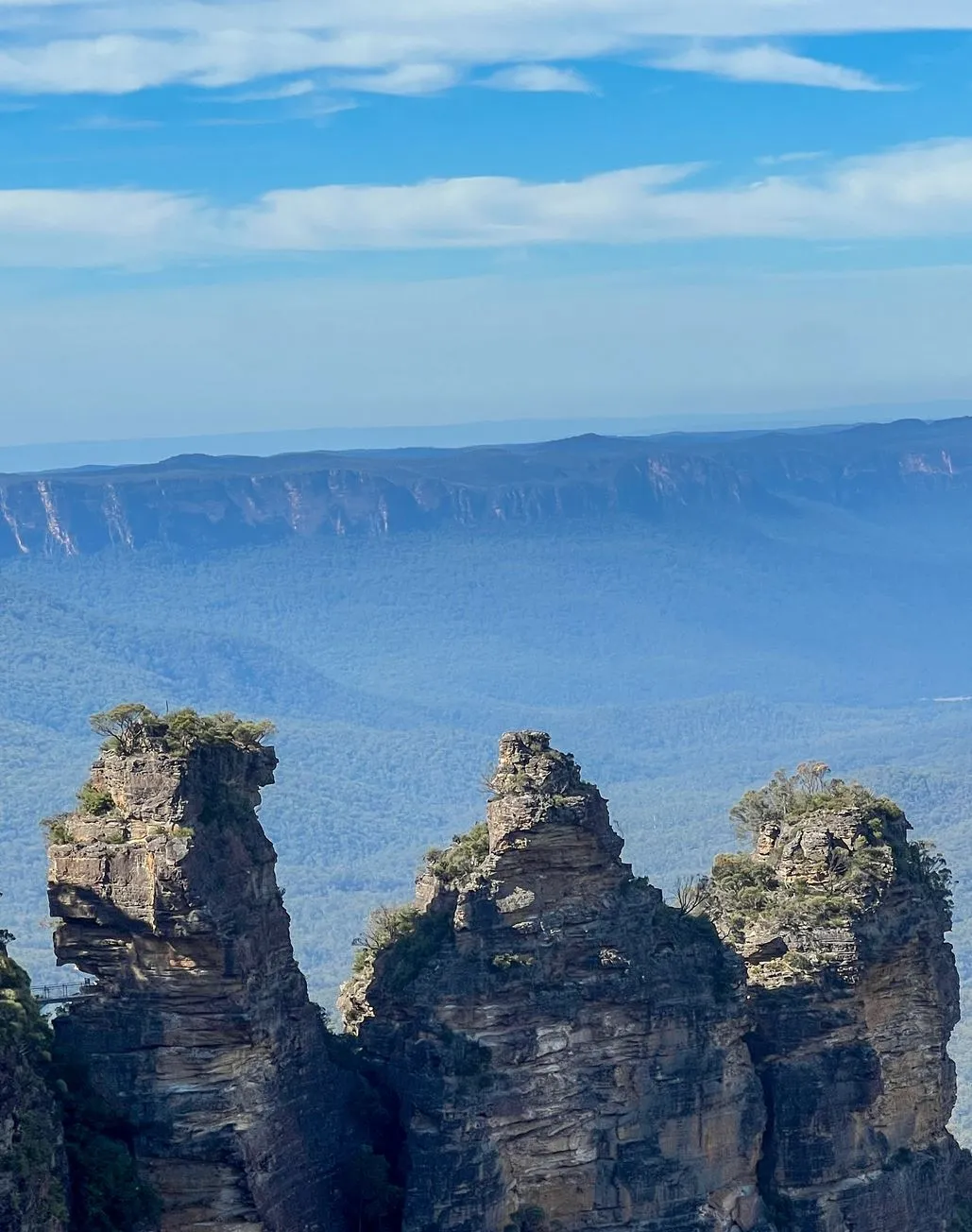
Here are a few quick facts to put this ancient connection into perspective:
- 22,000+ years: Human presence in the Blue Mountains.
- 300+ Aboriginal sites: NSW Heritage Database.
- 50+ rock art shelters: Blue Mountains National Park.
- 3 nations: Dharug, Gundungurra, Wiradjuri.
- 1 continuous culture: Still guides the Country today.
This isn’t ancient history buried under progress — it’s a living culture that runs alongside the modern trails, railways and roads built centuries later.
Want to experience it for yourself? Join one of our Blue Mountains Tour journeys. We partner with local Aboriginal guides who share their stories, knowledge and respect for Country — because the best way to learn about the Blue Mountains is to walk it, not just watch it.
FAQ
How Old Are The Oldest Aboriginal Sites In The Blue Mountains?
Kings Tableland and Wentworth Falls sites are over 22,000 years old, some of the oldest in southeastern Australia.
Which Aboriginal Nations Are Connected To The Blue Mountains?
Dharug, Gundungurra and Wiradjuri are the Traditional Custodians of this region.
Where Can Visitors See Aboriginal Rock Art?
Red Hands Cave (Glenbrook), Kings Tableland (Wentworth Falls) or the rock shelters near Mount Victoria.
Can Tourists Visit Sacred Sites Freely?
Some are open, some are protected. Always respect signage, permits and guidance from Traditional Owners
How Can I Learn More About Aboriginal Culture In The Blue Mountains?
Drop by the Blue Mountains Cultural Centre, or connect with the Gundungurra Tribal Council and Darug Custodian Aboriginal Corporation for cultural walks and local insights.